Ternara Semiconductor · Vision
Future products on our chips.
This page is about what could be built on top of ternary blocks together with partners: networks where devices pass data to each other, and devices that become network nodes themselves. It is a direction, not finished products.
Vision. None of these devices has been built, and no Ternara block is in any device.
Mesh networks
Towers between cities. Mesh inside them.
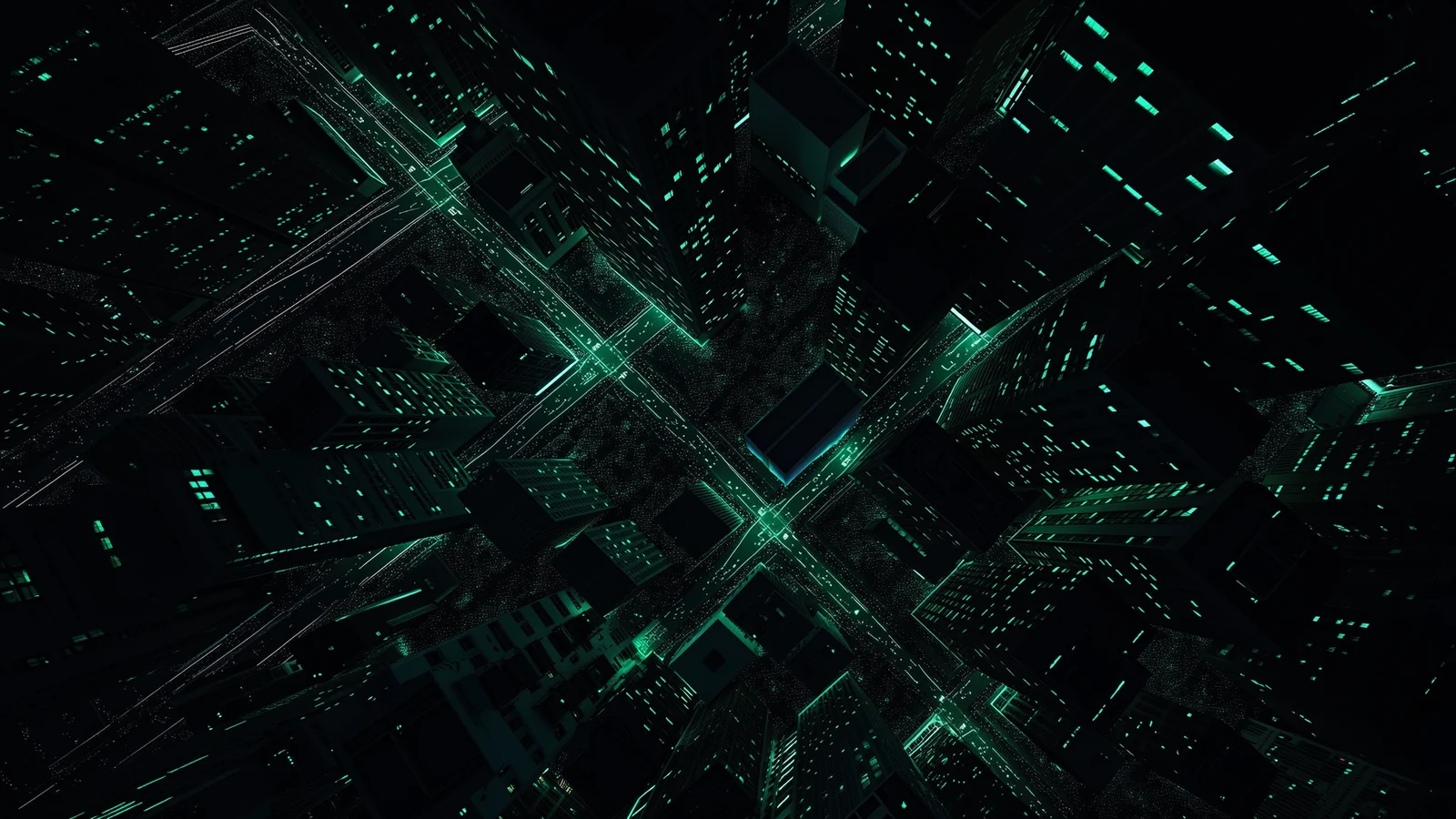
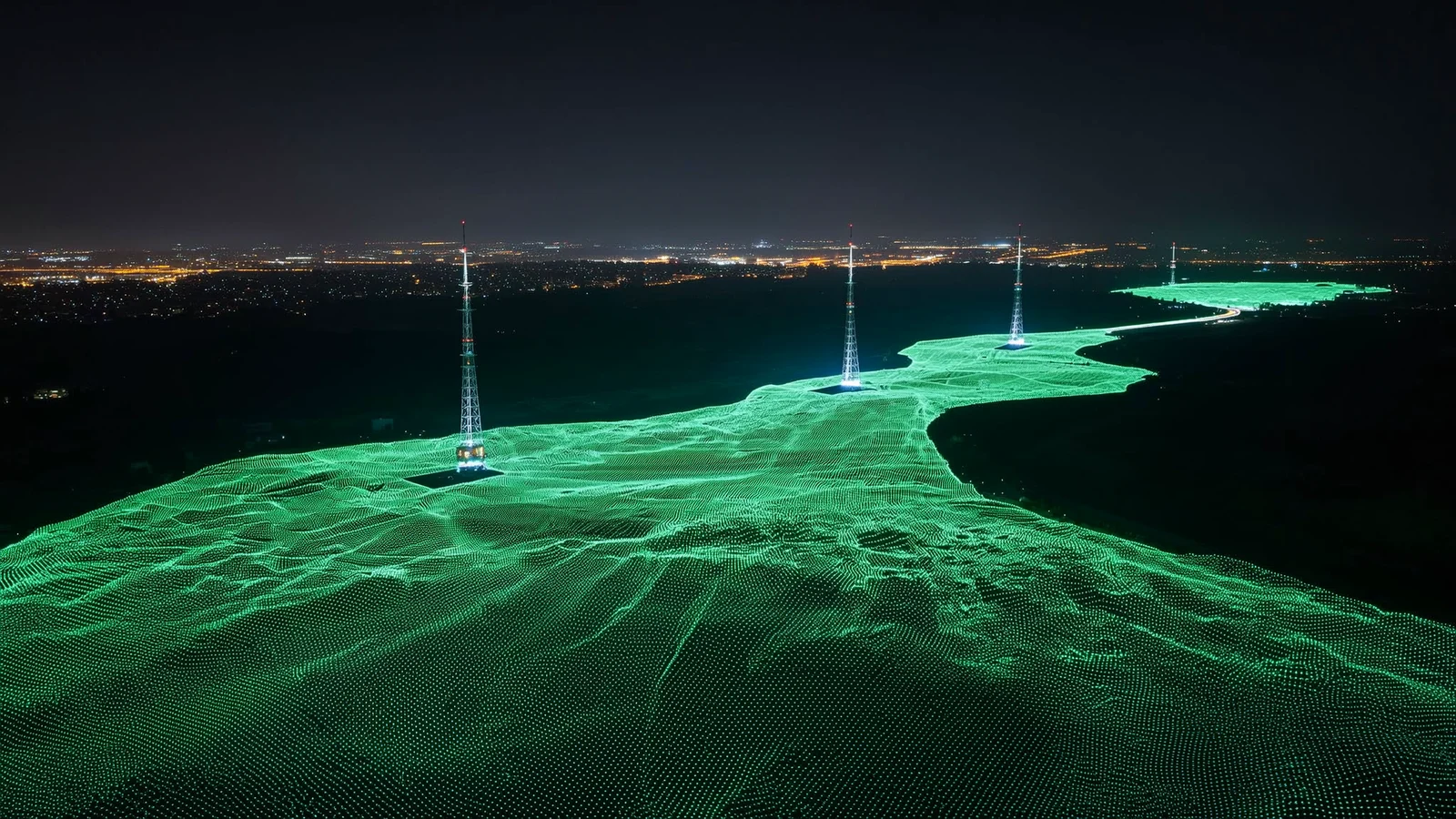
Today every block needs a cell tower nearby. In our vision, towers carry traffic between cities, while inside a city devices pass packets to each other: phones, routers, appliances. The more devices, the denser the network.
Already working today
- Meshtastic turns inexpensive LoRa radios into an off-grid text-messaging mesh: each radio rebroadcasts what it hears, at 0.33 to 21.88 kbit/s depending on the preset. Source: meshtastic.org ↗
- NYC Mesh links buildings with rooftop routers so traffic passes from building to building across New York, and reaches the internet by peering at an internet exchange point, with fibre-connected supernodes. Source: wiki.nycmesh.net ↗
- guifi.net, a community network mostly in Catalonia and Valencia, reported over 37,000 active nodes and about 71,000 km of wireless links in December 2021. Source: en.wikipedia.org ↗
- Freifunk in Germany counts about 400 local communities and over 41,000 access points running OpenWrt-based mesh firmware. Source: en.wikipedia.org ↗
What it would take
- Gupta and Kumar (2000) showed that in a multi-hop wireless network of n random nodes, each node's throughput falls as W/√(n log n): the bigger the mesh, the less each node gets.
- In MIT's 2001 simulations, a long chain of 802.11 relays delivered about 1/7 of the single-hop rate; capacity scales with network size when traffic stays local.
- NYC Mesh describes mobile-phone mesh networks as very low bandwidth, not real-time, and needing phones close together, and connects buildings instead.
- Working city meshes depend on backhaul: NYC Mesh peers at an internet exchange and uses fibre, and guifi.net uses long-distance Wi-Fi links and community-owned fibre.
- LoRa meshes such as Meshtastic run at 0.33–21.88 kbit/s: enough for text, not for video or live calls.
- As of a 2023 survey, 5G sidelink had no standardized multi-hop routing; phone-to-phone relaying across a city is not part of today's cellular standards.
- Radio is regulated: in the US, unlicensed devices have no vested right to a frequency, must not cause harmful interference and must accept interference (47 CFR §15.5); in the EU, licence-free LoRa bands are limited by duty cycle, and cellular bands need licences.
- Ternara blocks have no radio today. A radio chip of our own is possible as a separate future product, but it is analog RF design, a much harder field than digital blocks. Radio certification (Anatel, FCC, CE) is required.
Community nodes
Every device can be a node.
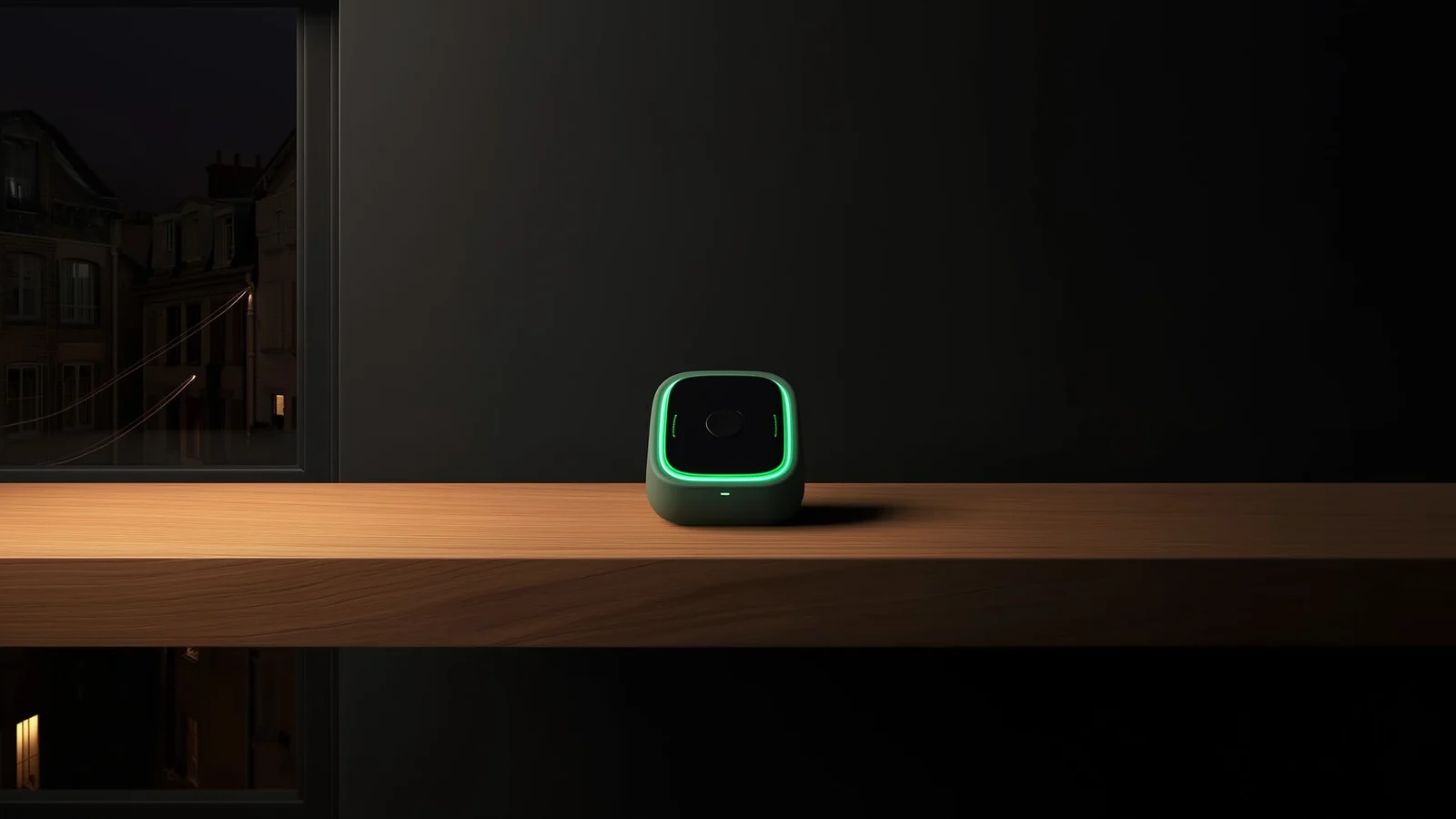
When your device relays other people's traffic, the network can pay you for it. Community networks already work this way; a Ternara device could join one as a node.
Already working today
- In Althea networks, routers meter traffic and pay their neighbours small blockchain payments for forwarding packets; well-placed home routers can earn by relaying. Source: updates.althea.net ↗
- Althea says its networks carried 10,000,000 GB of traffic in 2025 across 12 US states and 4 countries. Source: althea.net ↗
- Helium's network has about 141,000 Wi-Fi access points, of which about 40,000 actively carry traffic; carriers pay per gigabyte for offload, and operators earn HNT or US dollars. Source: lightreading.com ↗
- Since April 2025, AT&T subscribers can connect to Helium's community-built Wi-Fi network through Passpoint. Source: helium.com ↗
What it would take
- Relaying income depends on paying traffic: in 2022 Mashable reported that Helium earned about $6,500 a month from data use, and some hotspot owners reported earnings as low as $0.10 a month.
- Regulators watch these models: in April 2025 the SEC obtained a final judgment against Helium's creator Nova Labs, with a $200,000 penalty, over misstatements to investors about which companies used the network; the SEC dismissed its other claims without assessing their merits.
- This section describes other projects. It is not an offer of income or an investment.
Put ternary compute to work.
Ternara is a technology, not just a chip: compute blocks for ternary-weight AI, taken from a written spec to a finished layout, with evidence at every step. Start with a pilot: one block for your chip, device or product, with its checks and a chip passport.
Request a pilot